THE PROBLEM
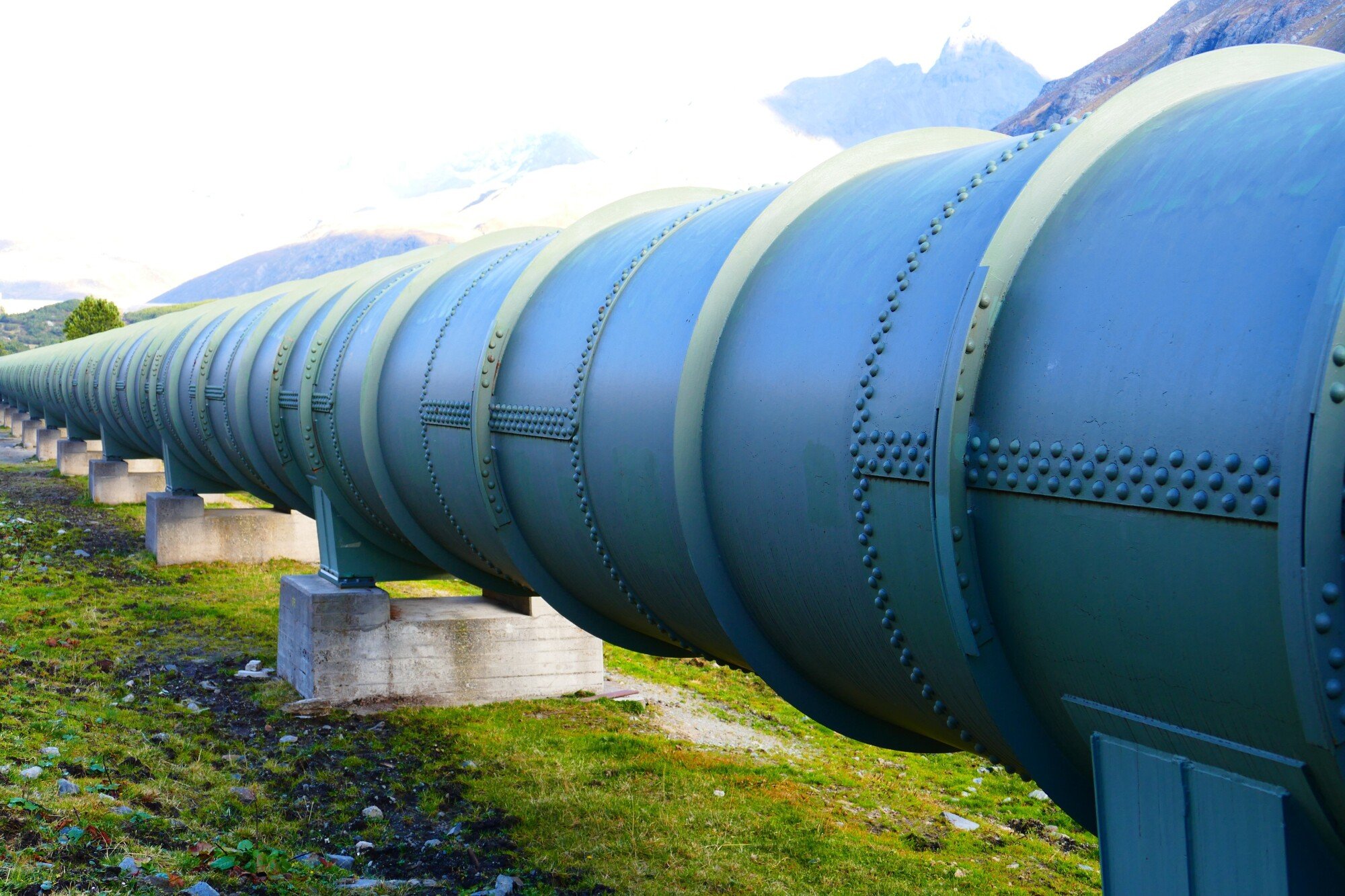
A single compromised password brought down a pipeline
In May 2021, Colonial Pipeline suffered a ransomware attack triggered by one stolen VPN credential, resulting in a $4.4M ransom payment. This attack impacted service stations, airlines, and other businesses along the east coast of the United States. Meanwhile, over 700,000 cybersecurity roles sat unfilled. The talent shortage was real — and managed service providers (MSPs) were the answer.
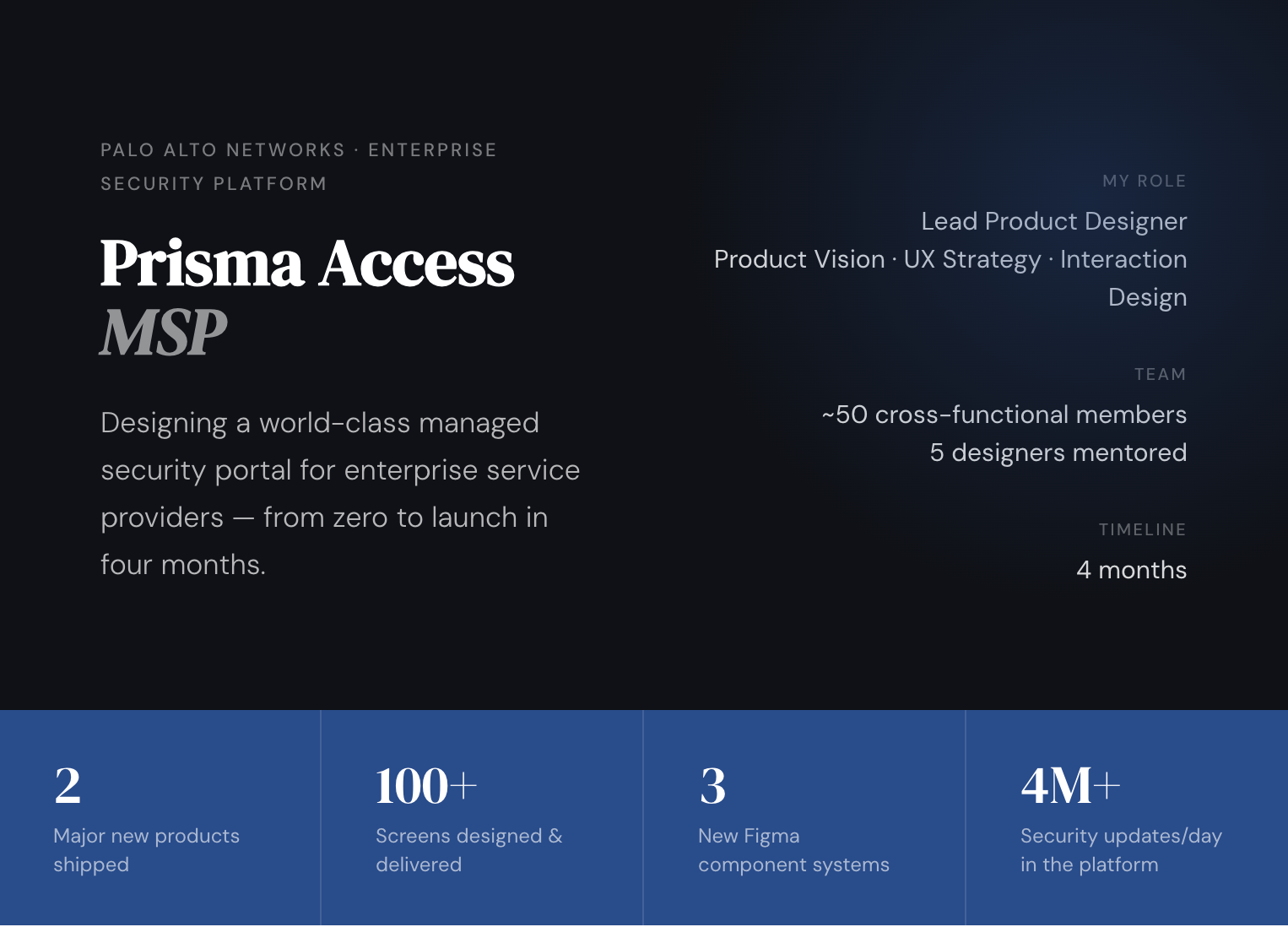
Palo Alto Networks saw an opportunity: build a platform that lets companies like AT&T, Verizon, and Accenture manage sophisticated cloud security across thousands of clients — at once, at scale.
The design challenge: How do you give a security super-admin meaningful control over a hierarchy of thousands of clients, without drowning them in complexity?
THE USERS
A new persona emerged from the research.
We started with known personas — security administrators, network admins, business admins. But direct customer research revealed someone we hadn't fully accounted for.
The Security Super Admin
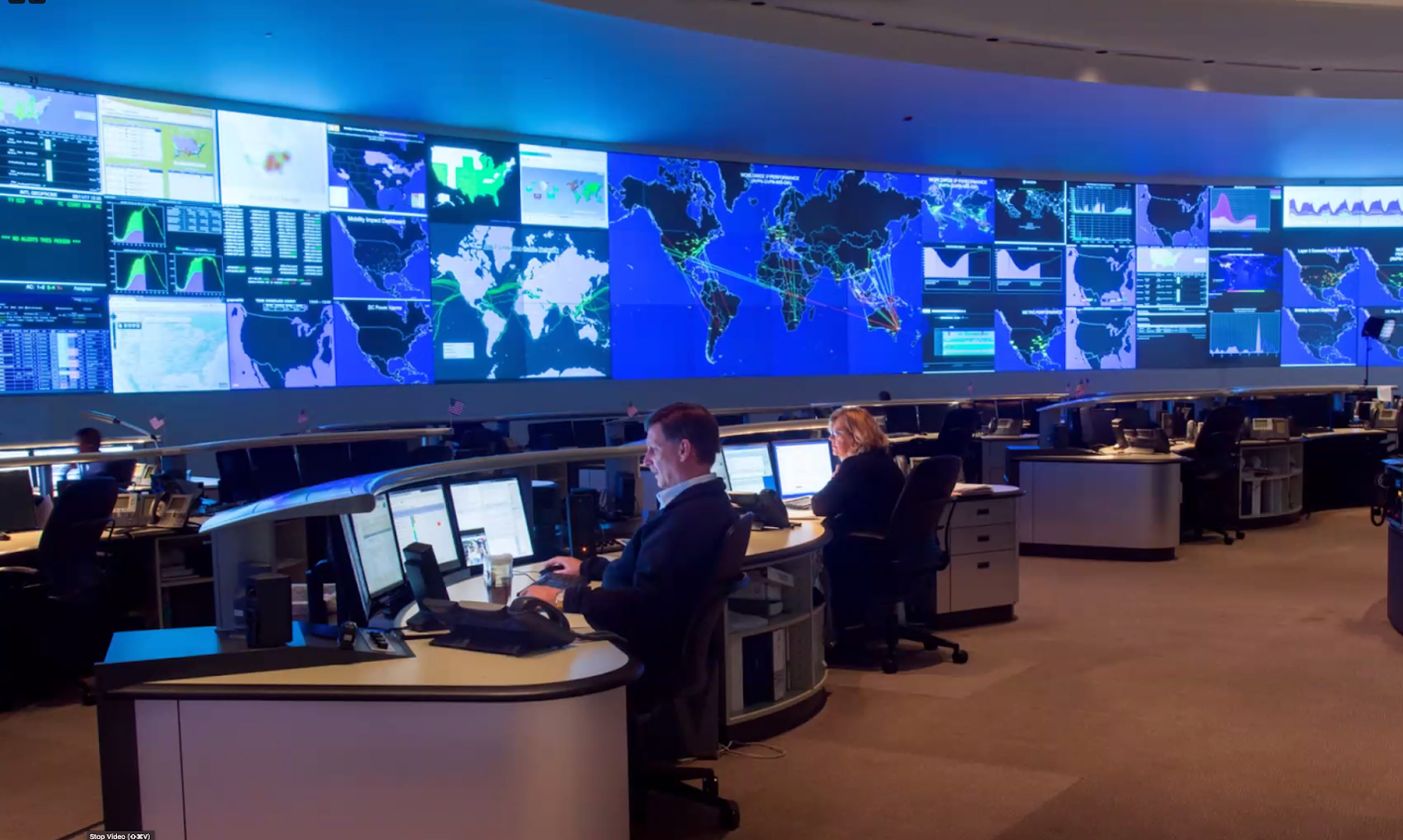
Highest-level permissions. Works at enormous scale — managing security policies, licenses, and configurations across dozens or hundreds of enterprise clients simultaneously. Speed, clarity, and hierarchy navigation are everything.
Understanding this persona reframed the entire product. The key design challenge wasn't managing one client — it was navigating any client, at any level, to perform complex tasks on any subset of that hierarchy.
DESIGN PROCESS
Three experiments, one clear winner.
We worked quickly in low fidelity, running user research with internal sales engineers who had deep familiarity with real MSP customer needs. Three distinct approaches were explored and tested.
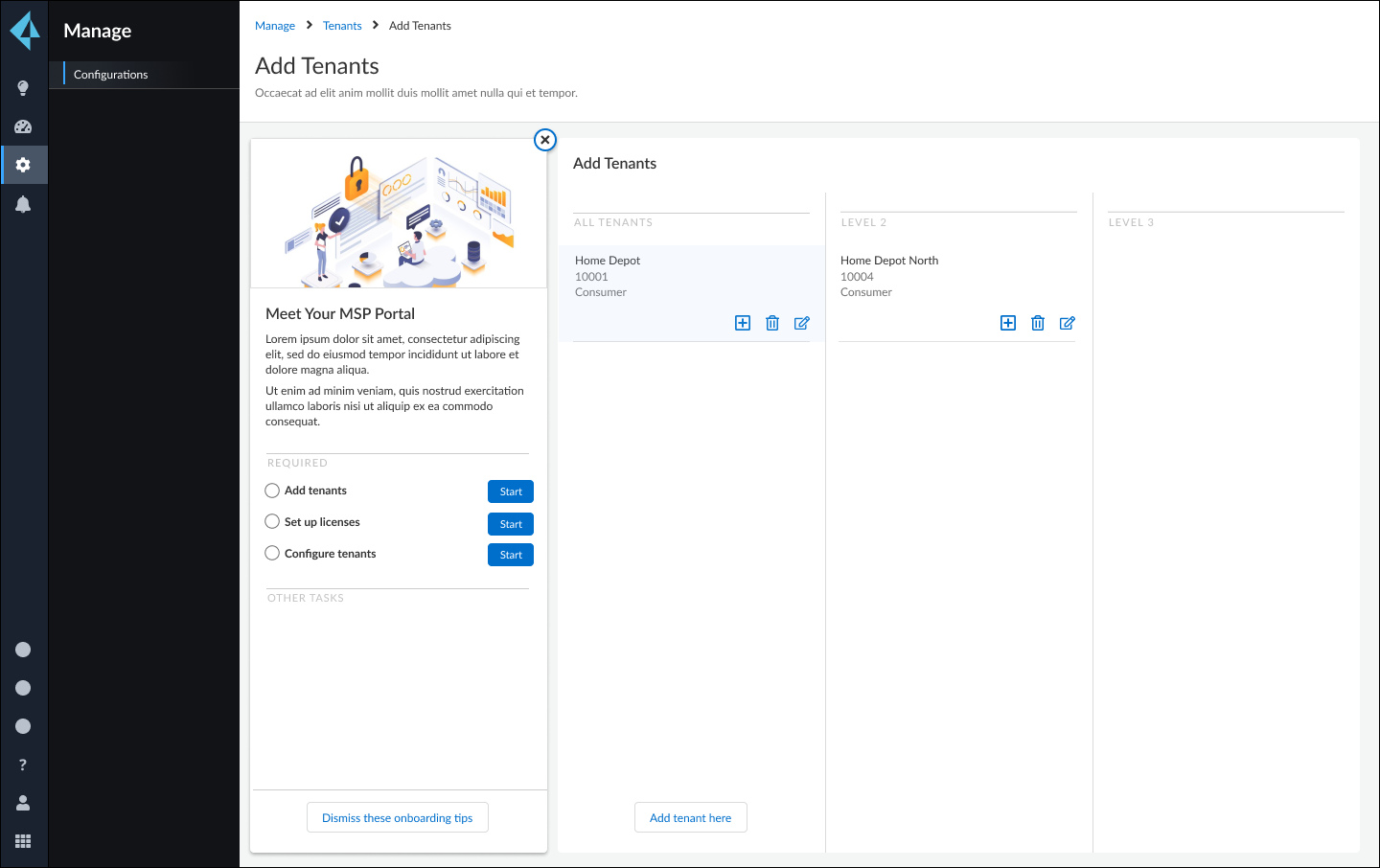
Experiment 1
Column browser + onboarding overlay
Design team loved it. Users didn't find it intuitive — the mental model didn't match how they thought about client navigation.
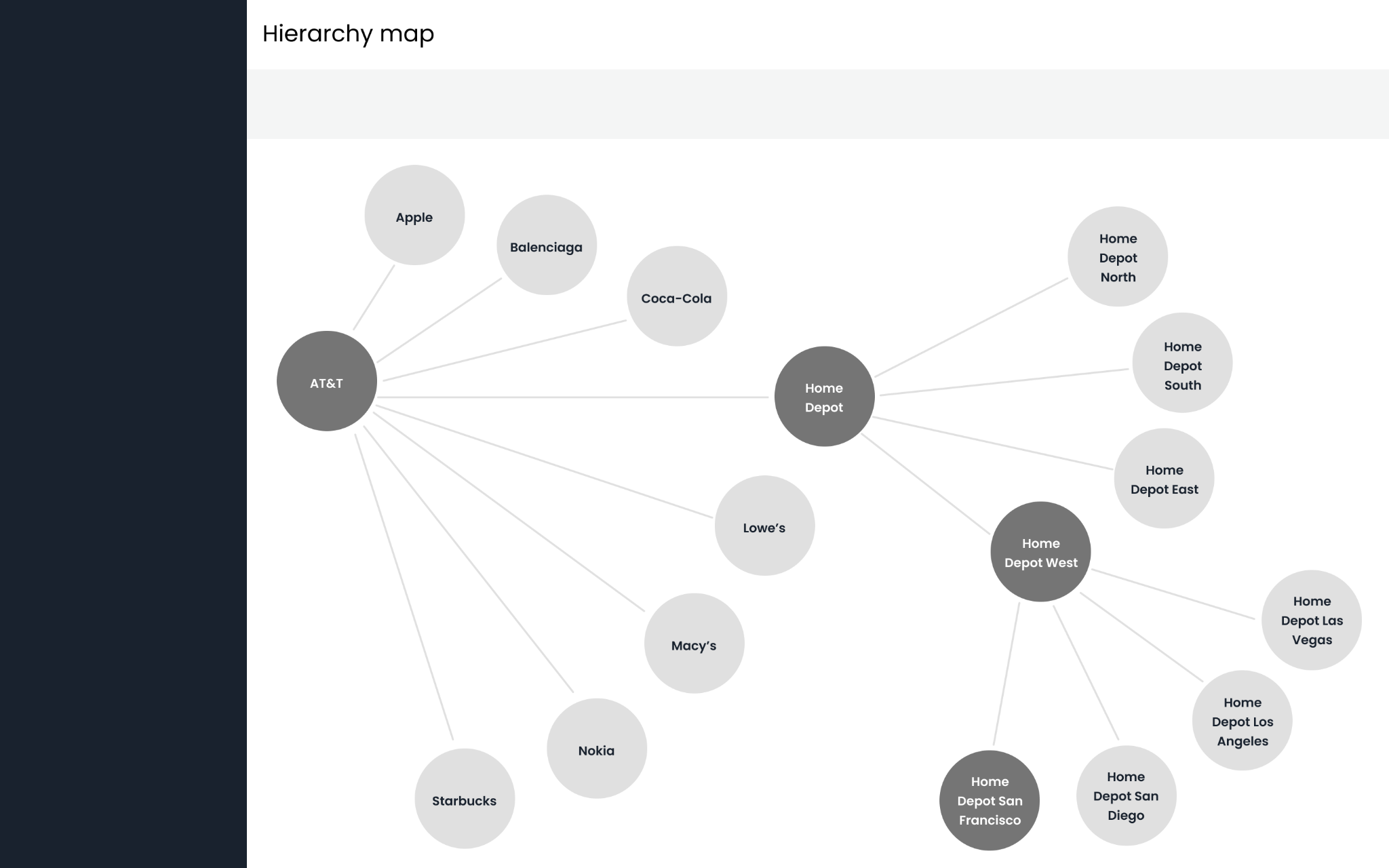
Experiment 2
Network graph / hierarchy map
Visually impressive. Too hard to scan, search, and select subsets of customers at the scale MSPs actually work at.
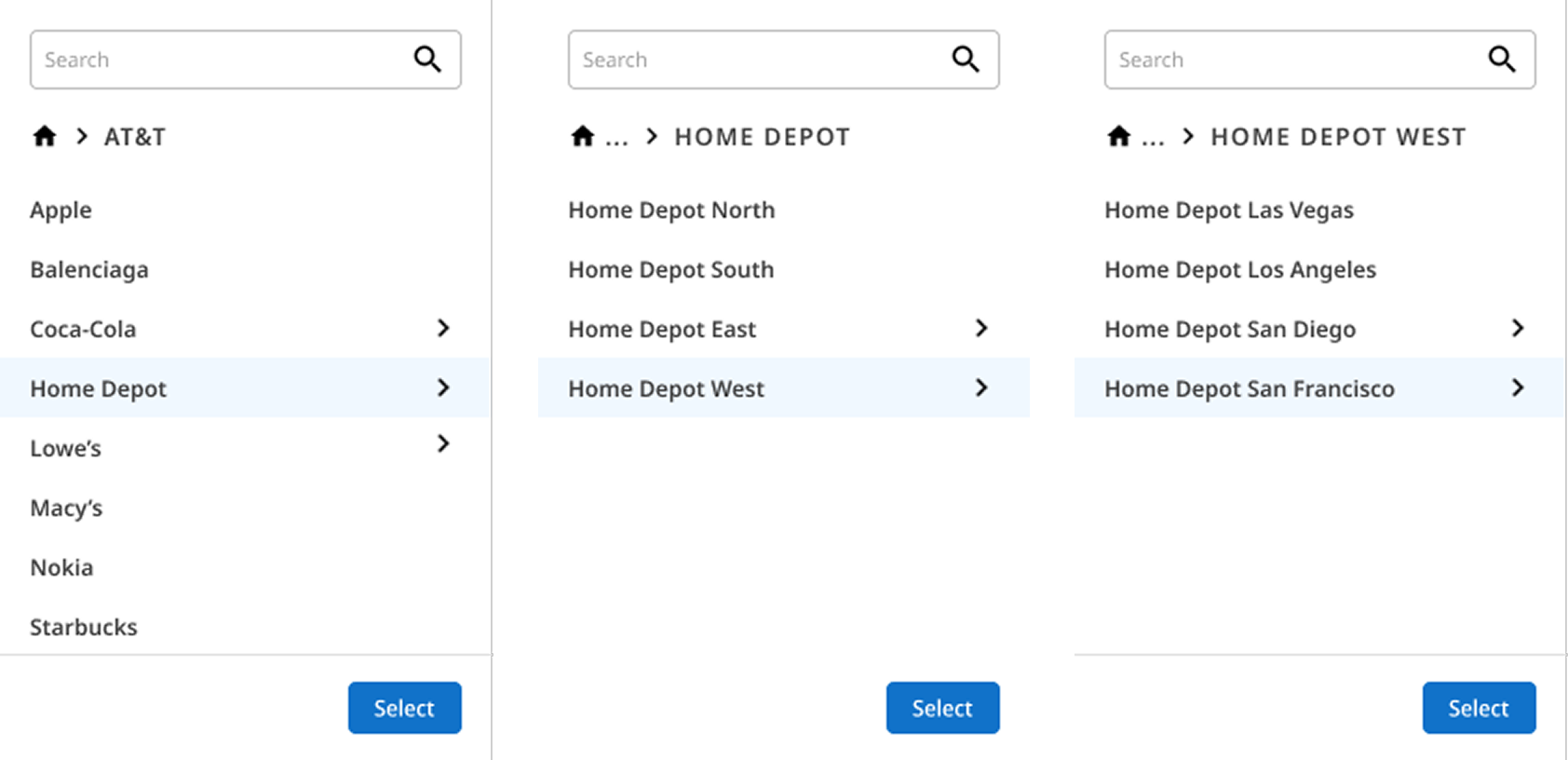
Experiment 3 ✓
Familiar hierarchical tree navigation
Users responded best to simple, familiar patterns. A compact search-and-drill dropdown let them browse thousands of customers in a very small space.
FINAL DESIGNS
From monitoring to management — at any level of the hierarchy.
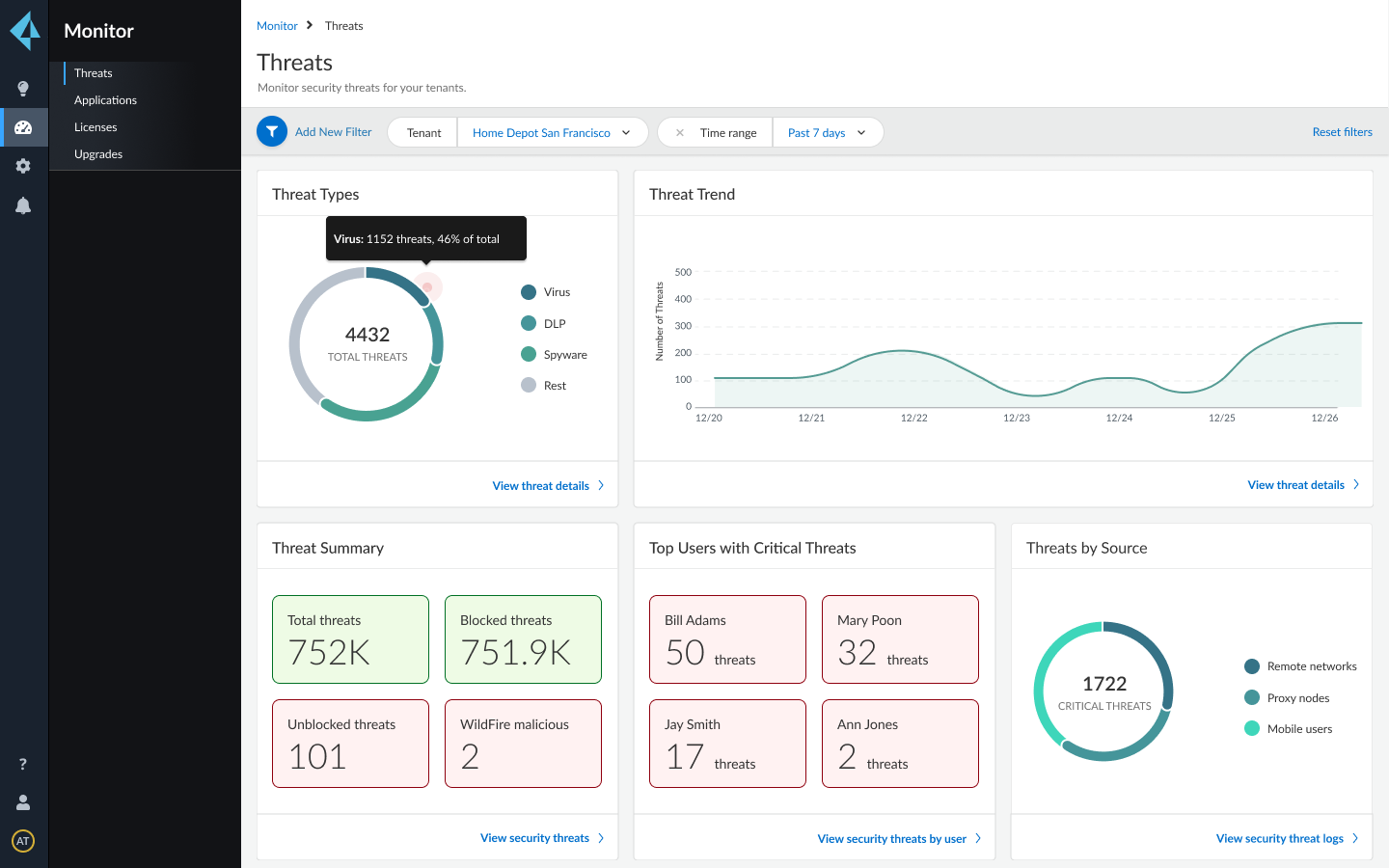
The MSP Portal was built around a persistent tenant-switcher that let admins move fluidly between aggregate views and granular single-client analysis. Every screen worked at any level of the customer hierarchy.
Only selected designs are shown here.
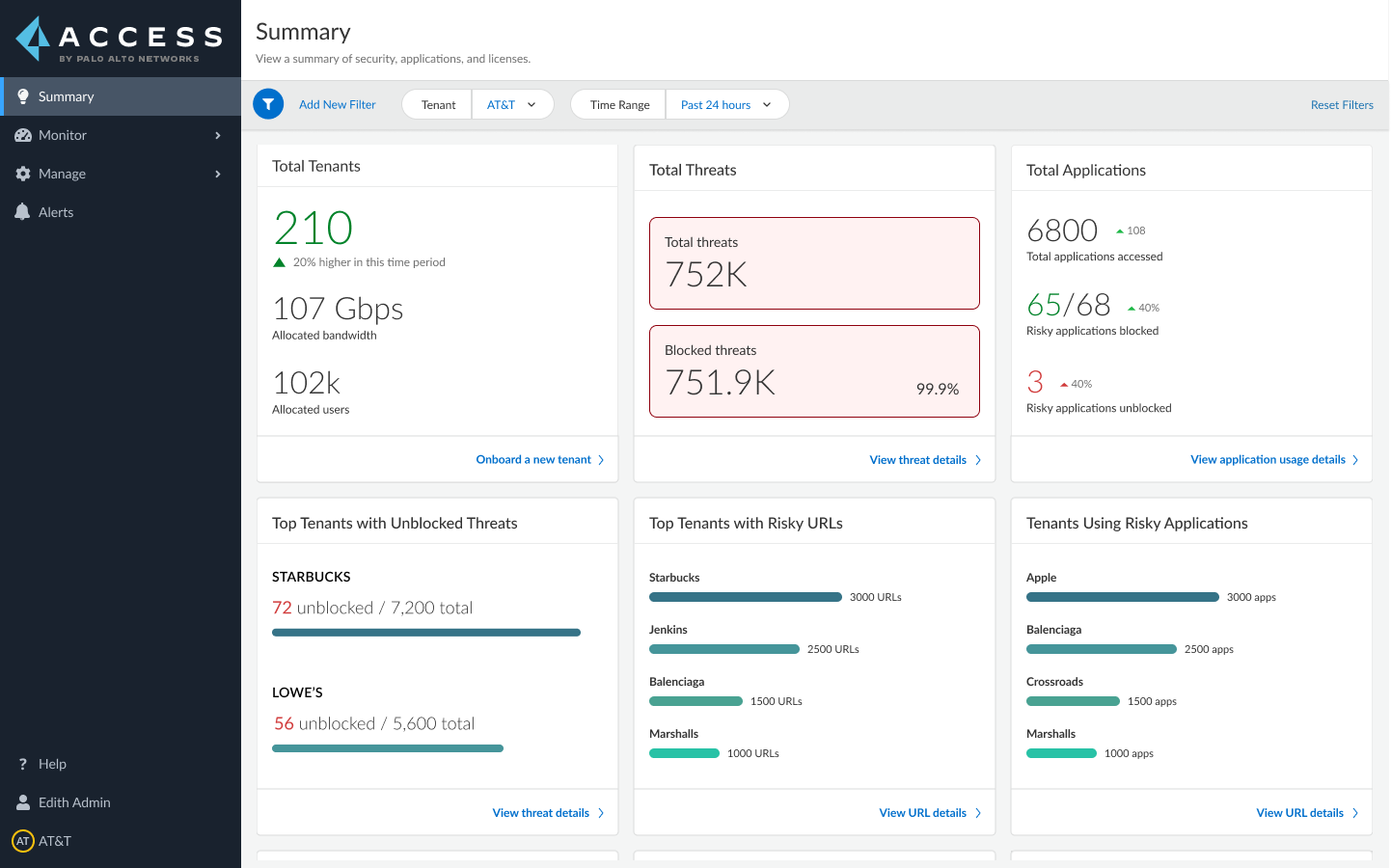
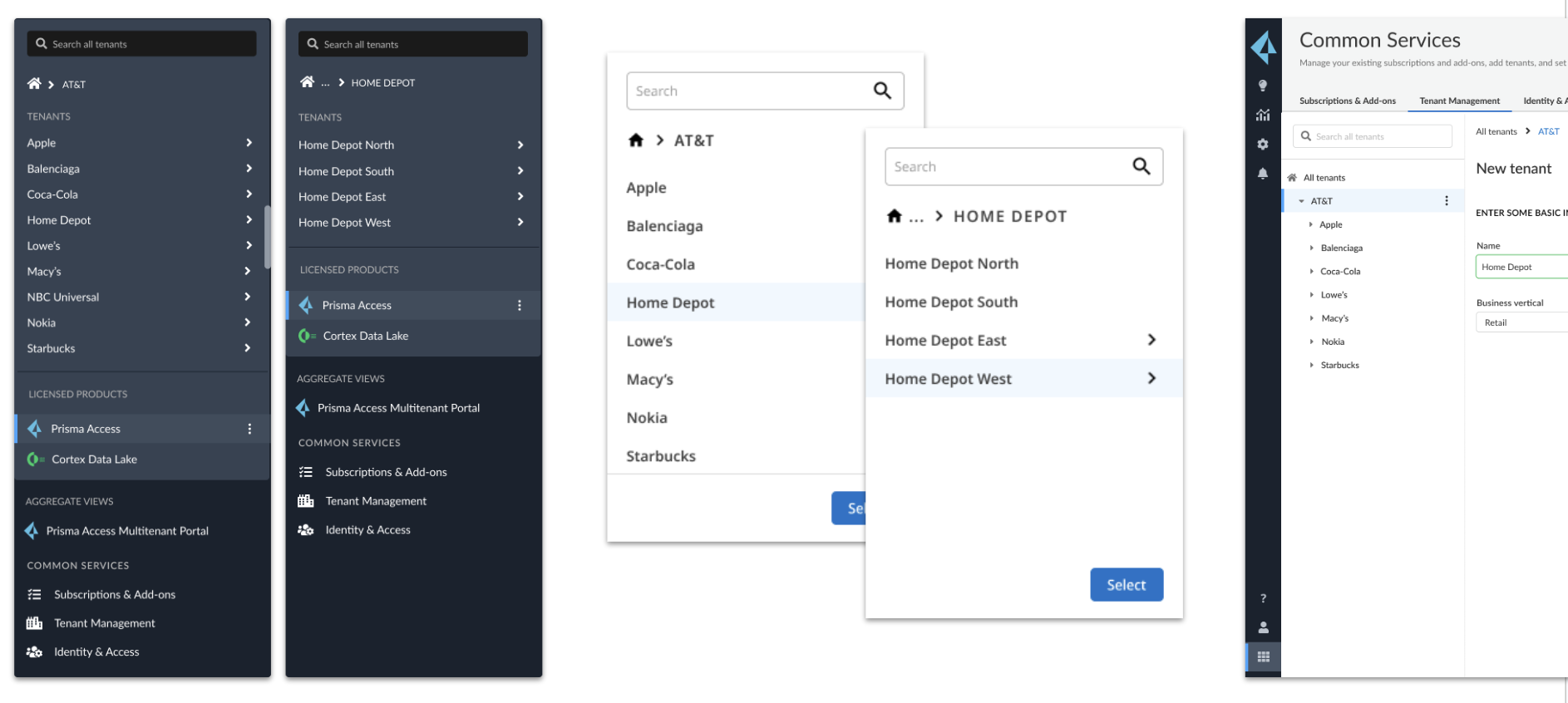
I designed the same hierarchical navigation component in three variants — a sidebar panel, a flyout picker, and an inline tree — all built as reusable Figma components that the broader platform could adopt.
IMPACT
Two major products. One foundation that scaled.
Six months after launch, the MSP Portal work had shipped two major enterprise products. The design system and navigation patterns also became the foundational architecture for Prisma Access SASE — a broader platform combining security, networking, and user experience of the network.
For Palo Alto Networks
Two major new products shipped. 100+ screens. 3 new reusable Figma component systems that seeded the SASE platform.
For MSPs
Can now manage sophisticated, multi-tenant cloud security across any number of enterprise clients from a single portal.
For End Customers
Protected from security threats across all locations — with MSP partners able to respond faster at greater scale.